Friday, November 11, 2011

Hunting Trophy Turkey in Nebraska

Hunting Meriam's Turkeys in Nebraska with Scott Croner!
© 2009-2011 Albert A Rasch and
The Rasch Outdoor Chronicles
$g&m f9bd 45kd q!?5. trochronicles.blogspot.com
Hunting Trophy Merriam's Turkey

While pecking away at the keyboard some time ago, I came upon fellow Outdoor Bloggers Summit member Scott Croner’s Blog, Nebraska Hunting Company. I meandered off to his company website, NebraskaHunting.net, to see what it was all about. I am always curious what fellow bloggers do when they are not beating the keys off the keyboard. Makes me feel like I know everyone a little better.

As it turns out, Scott is an outfitter based in Nebraska and covers several of the Midwest states in his pursuit of American big game, waterfowl, and turkey. Not only that, but we had some interesting acquaintances in common, but more on that later.

Scott has some great pictures of his clients on his website, and on the left hand side is a beautiful turkey that one of his clients harvested. Big turkey too, as far as I can tell.

But before I get into what caught my eye, I think a little bit of turkey talk information is in order! You would be surprised at how much there is to know! I certainly was.

There are two species and four subspecies of turkeys.

Eastern Photo Credit: WL McCoy
There’s the Eastern Wild Turkey. He’s your garden-variety turkey that you see all over the place except on opening day of turkey season, or for that matter the rest of it too. Since the eastern wild turkey ranges the farthest north, individuals can also grow to be among the largest of any of the subspecies. The adult male, can be as tall 4 feet (!) at maturity and weigh 20 pounds plus. As an aside, the turkey came in second as the bird of the National Seal. (They say Ben Franklin was besides himself when they told him the news! Legend has it he said, “$&!% that Jefferson!”)

Osceola Image Credit: CL Evans
These are my own hometown turkeys. The Osceola is named for the famous Seminole Chief, Osceola. They are a bit smaller than the eastern variety and live in the oak and palmetto hammocks where they thrive on palmetto bugs, acorns and palmetto berries, the slash pine woods, and the swampy habitats of Florida. (Basically everywhere else on the southern two thirds of the peninsula.)

Rio Grande Image Credit: TwoTom
The Rio Grande subspecies lives adjacent to what’s left of the Rio Grande. But they are found as far north as Kansas, usually by water. The Rio Grande turkeys are comparatively pale and copper colored, and they are awful long legged compared to their cousins; sort of like that redheaded girl in middle school that you were scared of.

Merriam's Image Credit: Alice Outwater
Further north still, and probably the handsomest (if you don’t include the fellows from south of the border), is the Merriam. This species is most at home in mountainous wooded regions, and it has been successfully stocked in areas far away from its original range in the southern mountains of Western America.

Gould's Image Credit: Ornitholoco
The Goulds, named after J. Gould who, I guess, discovered them in 1856 during his Mexican road trip in search of artisanal agave tequila. The Goulds are pretty rare at about 800 or so in the US, though a substantial population lives in Mexico. Arizona and New Mexico offer limited hunting opportunities for the Gould’s wild turkey, while stocking from Mexico continues to increase their numbers in the South Western US.

Ocellated Image Credit Real Turkeys
The prettiest of them all is the Ocellated turkeys. They are their own species and do not have any sub-species. Both male and female ocellated turkeys have beautiful greenish-bronze iridescent feathers, but neither the male nor female have a beard. Their tails feathers have a blue spot that terminates in orange at the ends, and the head and neck is also pale blue with bright orange warts. They live in the tropical forests of the Yucatan Peninsula in southeastern Mexico. They are truly a remarkable and beautiful bird.

Now I have always known turkey hunters to be a little obsessed. Box calls, slate calls, glass calls, owl hooters (Hooters? Who knew?), camouflage, gilliesuits, blinds, special chokes, shotguns, knee-pads, and shells in different lengths, sizes colors and loads. And that doesn’t include the turkey bowhunters!

I had no idea how far the turkey madness went.

Curiosity peaked more than was probably good for me, I found the National Wild Turkey Federation website. Much to my delight it was a virtual warehouse of information, chuck full of all sorts of turkey stuff. Single-handedly, they have managed to complicate the relatively simple idea of killing a turkey, and elevated into well nigh an art form.

I was entranced and enthralled by it immediately.

By now it was getting late while I was reading all of this, and I came to the “Slam” page. Logically I assumed that this was the recipe page where turkey, egg, and pancake met. But, much to my surprise and glee, what I found was the Holy Grail of turkey hunting aficionados. The Slams my friends, are the different levels of madness that one can attain by hunting the different subspecies of turkeys! And you get a certificate (Suitable for framing!) commemorating the event and a pin for your lapel! All that is required is membership in the National Wild Turkey Federation , and the turkeys.

These are the Slams that NWTF awards:
  • Grand Slams consists of the Eastern, Rio Grande, Merriam's and Osceola (Florida) birds
  • Royal Slams is the four subspecies listed above in addition to the Gould's bird
  • World Slams include all five subspecies listed above in addition to the Ocellated wild turkey
  • The Mexican Slam consists of the following birds harvested in Mexico only: Rio Grande, Gould's and Ocellated. Of course you are required to survive the experience. No posthumous awards issued.
  • The Canadian Slam consists of harvesting the Eastern and Merriam's bird in the following provinces: Ontario, Quebec, Manitoba, Alberta or British Columbia, and then serving them with thick sliced bacon.

Unlike many other feats of huntsmanship, like hunting Marco Polo sheep with a spear and loincloth, this one is a relatively attainable goal. The NWTF maintains records of the registered turkeys, and when you complete a NWTF Slam you receive a slam certificate for each slam you complete, you receive the distinctive wild turkey record slam pin for each of your slams, and they put you up on their Slam Website! And more importantly you do not have to kill all the turkeys in the same year. So this allows you to plan a great adventure far into the future with your family members or friends. That’s just Slamming!

So of course now I am all crazy about getting turkeys. I have always been interested, but now… I’m obsessed… must get calls…must get more camo…

Sorry, lost my train of thought. Phew! It’s worse than I thought.

Well this brings me back to Scott and Nebraska Hunting Company. While kicking around his site I saw a fascinating turkey. During the 2009 spring turkey hunt, one of Scott’s clients, Mr. Todd Ried, harvested a melanistic or black color phase Merriam’s turkey! As you can tell the turkey is almost completely black, a stunning and exceptional trophy indeed! Not only is the Merriam one of the lesser-harvested turkeys, but to get one in a color phase is just unbelievable.

Todd Ried with his all-black melanistic Merriam's trophy!

Melanistic mutations occur in almost all creatures from fish to humans. It is much like albinism but not as hazardous to the animal’s health as being all white in the dark green woods! Birds in particular have several other color mutations that can occur, including blue, yellow, and red. Red, or more appropriately copper or rust, is occasionally seen in turkeys.

I want one. In a full mount, flying, so I can take up even more room in our miniscule apartment!

Tom H., Scott C., and Warren P.
I called Scott up to inquire about his turkey hunting concessions (leases) and the general availability and the possibility of collecting a Merriam’s. Scott “Turkey Man” Croner told me of this past season, and I am not kidding you, I was taken aback by his success ratio. I have read and talked with enough hunters to know how difficult turkey hunting can be. The number of clients and the number of birds taken was simply phenomenal. I have to admit I was a little skeptical, but after checking his references and talking to several people, I have concluded that he is a very talented outfitter and his concessions are fantastic! Having good concessions is very important. Good concessions have good habitat and that is what makes or breaks a turkey population.

I called Scott back and we did a phone interview, a TROC first by the way. I have been so impressed by his good character, integrity, and know how, that I will definitely be booking with him when the time comes for me to collect my Merriam’s.

…and the Snow goose.

The turkey is going to need some company.

Contacts:
J Scott Croner
Nebraska Hunting Company
Nebraska Hunting Company Merriam's Turkey Hunting
Mobile: 402.304.1192
Email: scott@nebraskahunting.net

Related Posts: Quaker Boy Typhoon Turkey Call

Regards,
Albert A Rasch
Member: Hunting Sportsmen of the United States HSUS
The Hunt Continues...


Thursday, November 3, 2011

Great Young Florida Hunters and Hunting

Fellow Florida Hunters and Fishermen!
© 2009-2011 Albert A Rasch and
The Rasch Outdoor Chronicles
$g&m f9bd 45kd q!?5. trochronicles.blogspot.com
Photo Credits: "Buck" Bevillee
I had the opportunity to run into a couple of young Florida hunters recently. Both are very accomplished deer and turkey hunters here in Florida.


"Buck" Beville was kind enough to forward me a few pictures of some of the game he has taken.

To the left is a nine pointer that Buck took when he was a very young fellow. That's a deer anyone would be proud to take!

Below is a very nice 8 point he recently took.


A great archery Oceola Tom Turkey!

Nice Boar! Note the cutters.

As I meet more Florida Sportsmen, I'll be sharing their stories and successes with you. I might add that it was my pleasure to meet both these young men, and with good fellows like these as our next generation of hunters, we are definitely heading in the right direction.


Best Regards,
Albert A Rasch
Member:  Skull Mountain Tent Club
Member: Hunting Sportsmen of the United States HSUS (Let 'em sue me.)
The Hunt Continues...


The Rasch Outdoor Chronicles, Albert A Rasch, Hunting in Florida

Other Stories of Interest:
Best Boar Hunting Rifle Calibers: Part I

Sunday, October 30, 2011

Learn to Shoot with Red Ryder!

Learn to shoot well, cheap and easy!
© 2011 Albert A Rasch and
The Rasch Outdoor Chronicles

So You Want to Start Shooting and Hunting...
$g&m f9bd 45kd q!?5.
Image Credit: Grant MacDonald
I’ve had a couple of requests from folks that are asking me to please contemplate ideas for the aspiring or beginning hunter.

Come to think of it, that is a great topic, and one that I will gladly write about. I think it is of the utmost importance for the future of hunting and wildlife in general, that we do everything to encourage and facilitate new hunters, fishermen, and outdoorsmen into our ranks. Every new kid that picks up a fishing rod, every new wife that takes up a firearm, is yet another person that will appreciate the great outdoors, and will be a bastion against the forces of emotionalism and timidity that are swamping this nation.

The question posed to me by the indefatigable Mr Borepatch was, “What would you recommend to someone who's never been hunting?” And Steveo UK also added, “How about something for beginners.” I would like to look at it a little more broadly, and take up your specific questions in the next part.

When I am introducing folks, and especially children to shooting, I have a method that I like to use. It’s relatively inexpensive, fun for the whole family, and really sets the stage for everything else that follows. If you follow along too, you will not only start off on the right foot, but you will likely bring several other folks along with you too. This is assuming that you have never shot before, and that it is a new found interest, or you are bring someone up into the tradition and sport.

Now that I have your attention, let’s dive right into it. Go to Walmart and get two Red Ryder BB guns, and a couple of pints of BBs. They are cheap, and they are about the best introduction to shooting you will find. The Red Ryder is virtually non-threatening, and there is always the "You'll shoot your eye out kid!" from A Christmas Story to have fun with. Even mom's that are dead set against guns and things of that nature can usually be convinced to allow their precious princes and princesses to have a little fun with the BB guns.

So now, not only are we going to learn safe gun handling habits and the basics of shooting, we are going to create a safe and instructive atmosphere for others to learn in too.

I know most of you are familiar with the rules of safe gun handling but it never hurts to go over them again. It's of utmost importance that you also make a big deal out of the following rules. It is the basis of safe gun handling and is as important as the shooting itself!

  • Always keep the gun pointed in a safe direction. Do not allow the muzzle to point anywhere but down at the floor, or down range.
  • Always keep your finger off the trigger until ready to shoot. Do not allow your finger to touch the trigger or be inside the guard unless you are actually shooting.
  • Now your target and be sure of it. Identify and be sure of your target and anything behind it.
  • Always keep the gun unloaded until ready to use. Do not load until you are ready to shoot.
  • Last, assume every gun you handle is loaded. Assume every gun is loaded; do not ever take anyone’s word for it.
Ok, now to the nitty gritty. A cardboard box with a Sunday paper in it is a more than adequate backstop for a Red Ryder. Sheets of paper with a black magic marker dot are inexpensive targets. Now tape up a piece of paper with a couple of big black dots on it, and have at it, punch holes in that paper until you have grasped the fundamentals of shooting. This is the time to get those fundamentals down like breathing, positions, and techniques. There is very little you can’t learn with the Red Ryder! Before long you will be amazed by what you can do with the Red Ryder and a handful of BBs.

Have a bag full of rinsed out soda pop cans at your disposal, plenty of BBs and enough safety glasses for the whole group. Get your safety glasses at a big box store, they are much cheaper, and are the same Z-87 rating that shooting glasses are. You rinse out the cans so no bugs come out of them as you pull them out. If you won the BB gun battle, don't lose it on the bug front.

Safety first, so go through the rules, but don't make it dry and don't lecture. Have a little fun with it, but make sure the kids and adults know you mean business. I have a one warning rule, and that’s for the group as a whole. The first infraction gets a warning for the whole group, with any other infractions being immediate removal from the shooting area for the individual, and having to sit out the whole shooting match.

Image Credit: V Distortion

As far as the shooting goes, you can make up the game's rules to suit your proclivities. Get a couple of boxes and lay a 2X4 over it and line the cans up. You can tie some twine to the tabs and string them up from a low hanging branch or clothesline. Anything that appeals to you and that keeps everyone’s attention and focus is good.

Start out each person individually so you can observe the level of responsibility and attention span of each one. If you are comfortable with what you see, allow a couple of them to shoot at the same time.

Father and daughter, Mom and Dad, Mom and son teams are always a lot of fun, and I make sure that the kids win often! Nothing primes the desire to shoot like being a winner.

So now we have convinced Mom or your neighbors that at least BB guns aren’t inherently evil. Maybe you’ve made a few converts along the way, and naturally they want to expand their repertoire. In the next installment we will take the next step.

Related Links:
Learn to Shoot, Break the Flinch
Boar Hunting Calibers: Part I

Wild Ed's Texas has this! Shoot Where You Look!


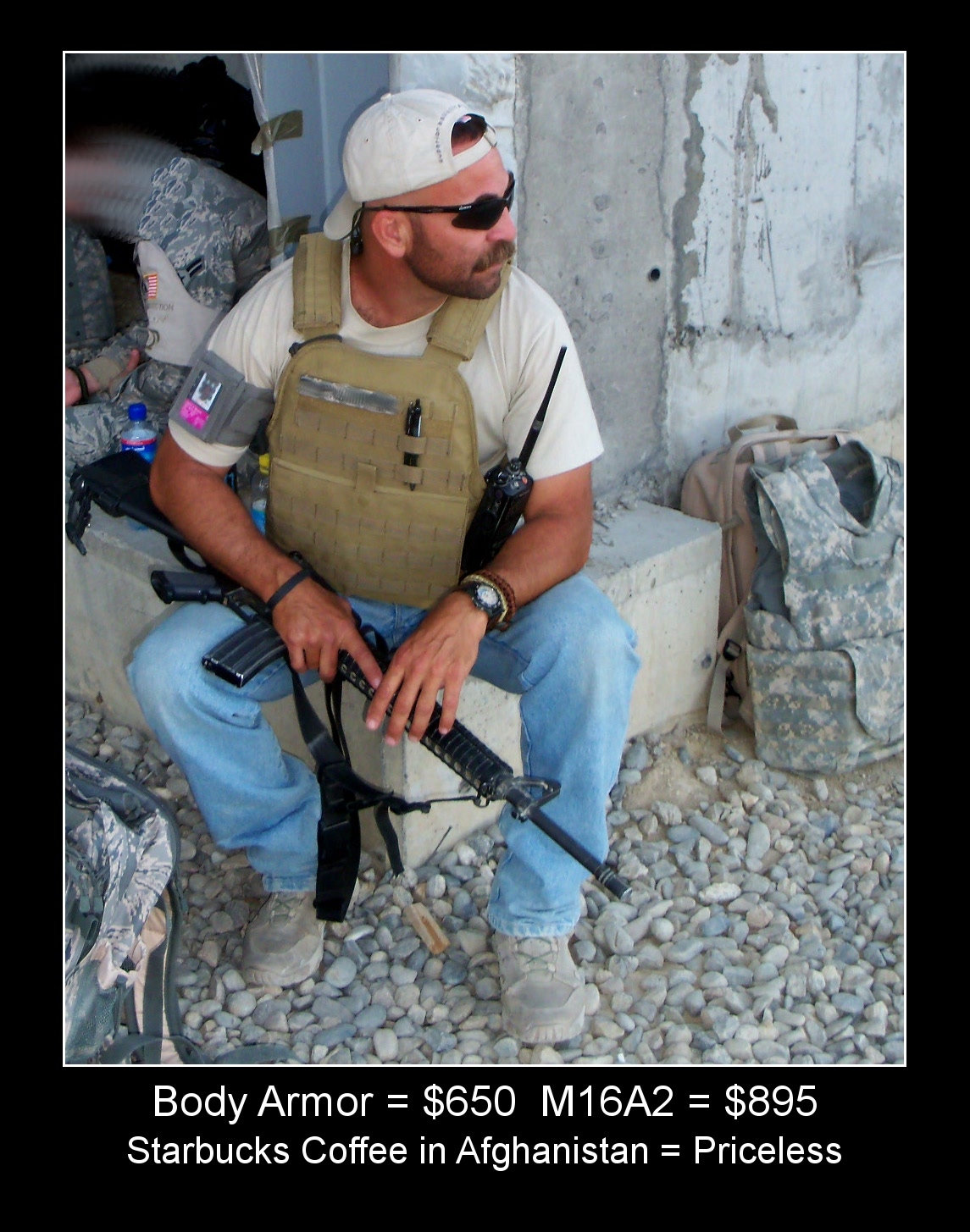
Albert A Rasch, Afghanistan, Starbucks Coffee
Though he spends most of his time writing and keeping the world safe for democracy, Albert was actually a student of biology. Really. But after a stint as a lab tech performing repetitious and mind-numbing processes that a trained capuchin monkey could do better, he never returned to the field. Rather he became a bartender. As he once said, "Hell, I was feeding mice all sorts of concoctions. At the club I did the same thing; except I got paid a lot better, and the rats where bigger." He has followed the science of QDM for many years, and fancies himself an aficionado. If you have any questions, or just want to get more information, reach him via TheRaschOutdoorChronicles(at)MSN(dot)com.


Scott Croner Albert A Rasch Albert “Afghanus” Rasch Albert A Rasch Scott Croner Nebraska Hunting Scott Croner, Merriam's Turkey Hunting Albert A Rasch Scott Croner Albert A Rasch Albert “Afghanus” Rasch Albert A Rasch Scott Croner Nebraska Hunting Scott Croner Merriam's Turkey Hunting Albert A RaschAlbert A Rasch So, you want to be a contractor. Handfeeding a Baby Mockingbird Clean and Repair your Ruger 10 22 Magazine

Thursday, October 27, 2011

RV Florida! Historic Forts and Fishing!

© 2011 Albert A Rasch, Joe Laing, and
The Rasch Outdoor Chronicles

Fishing Florida's Historic Forts: An RV Itinerary

Try as we may, we can't all raise families who share our obsessions. Fortunately, for the fisherman who can't bear a day away from the water (but whose spouse or kids might favor other pursuits), Florida doesn't require much of a compromise for anglers. Down here, it's easy to balance a vacation between water time and family fun.

For a road trip that will please every member along for the ride, it's hard to beat a tour of Florida's historic forts. Beyond the obvious historical draw, many of the state's military landmarks are now protected within the State and National Park system. That means plenty of hiking, camping, and just-plain-relaxing along the way. And best of all? Florida's strategic forts also happen to harbor some of the state's best fishing spots, from land and boat.

For a taste of the entire state, start in Pensacola and slowly make your way to Key West. On Pensacola Beach, make your first stop at Fort Pickens, part of the Gulf Islands National Seashore (http://www.nps.gov/guis/planyourvisit/fort-pickens.htm). In addition to this well-preserved landmark's importance during the Civil War, it's also home to a short but deep-water fishing pier. It's a great place to keep your line singing -- use cut mullet for bait, and you'll likely be helping the kids pull in small sharks and even Spanish mackerel. The grass flats to the east of the Pickens pier are a great place to stalk tailing redfish.

Fort Pickens includes a National Park campground, with plenty of amenities offered at just $20/night (http://www.nps.gov/guis/planyourvisit/campground-openings-in-florida-and-mississippi-districts.htm). And, of course, there's all the fun to be had on Pensacola Beach as well, where the 'whitest sands on earth' have (luckily) survived serious damage from last year's oil spill. It's such a nice spot to park your RV that you'll be tempted to stay, but there's a whole state left to explore.

Head east down I-10 toward Jacksonville, to Fort Clinch State Park, one of the best-preserved 19th century forts in the nation (http://www.floridastateparks.org/fortclinch/) Six miles of nature trails wind through the beautiful peninsula, bordered by the Amelia River to the west, Cumberland Sound (and Georgia) to the north, and the Atlantic Ocean on the east. 53 campsites offer both privacy and proximity to the entire park, which includes a half-mile long pier on the ocean side, making deep water fishing possible without a boat. With Egans Creek curving through the park's marsh, jetties to the north, the pier, and the option of surf casting on the beach a short walk from your RV, it's hard to beat Fort Clinch as an all-around saltwater fishing destination.

Next, head southwest toward Inverness, home of Fort Cooper State Park. Take the scenic route through beautiful Ocala National Forest, a part of Florida most visitors never experience (http://fs.usda.gov/ocala). The dense forests of Marjorie Kinnan Rawlings classic book, The Yearling, are still alive and thriving here in the north-central swampy woodlands.

Arriving at spring-fed Lake Holathlikaha, the azure water looks much as it did in the 1830s, when U.S. soldiers rested here at Fort Cooper, between skirmishes with the Seminole Indians. Due to low water levels, fishing and swimming were temporarily restricted during early summer 2011, but with rain, that could change at any time. Paddleboats and canoes are available at the park. This is the spot to paddle out with your toddler and drop worms for bream and largemouth bass.

Although Fort Cooper offers primitive camping, to park your RV, try nearby Riverside Lodge along the Withlacoochee River (http://www.riversidelodgerv.com/). The campground includes free canoe rentals, so after a day at Fort Cooper you can still get in an evening session along the river.

From here, head down the coast to Fort De Soto Park, situated on a truly stunning spit of land south of Tampa (http://www.fortdesoto.com/). Five interconnected keys make up De Soto, the largest park within the Pinellas County park system. Despite boasting 238 camping sites, it's a good idea to make reservations here -- this beach won Trip Advisor's Top Beach in America prize in 2009, and over 2.7 million visitors flock here each year. Still, with 1,136 acres, it's easy to find some alone time.

De Soto has two fishing piers, on both the Gulf and the bay sides, and each sells bait. There's a two-mile canoe trail, and a ferry to remote Egmont Key. Whatever your target species is, it's easy to find a superb fishing spot among these crystalline waters, where the Tocobaga Indians once harvested their own seafood bounties.

If time allows for a full tour of Florida, you'd be missing out not to journey through the Keys, arguably one of the prettiest drives in America. Fort Zachary Taylor allowed the Union to control the sea at Florida's southern tip, and has been impressively preserved as a state park (Try to visit near Halloween, when the fort is transformed into a Civil War-themed haunted house; http://www.fortzacharytaylor.com/home.html)

It's hard to beat the view when fishing from the fort, at the entrance to Key West Harbor. It's the finest place to watch a sunset in town, and you might just bring home dinner to an RV full happy, sun-kissed campers.


About the Author
Joe Laing is the Marketing Director for El Monte RV Rentals. Be sure to check out their new Professional Football (NFL) Tailgating and RV Tailgating to College Football Games pages in preparation for the upcoming seasons.

Tuesday, October 25, 2011

Environmentalists and Conservationists; It's How You Look at Things

The difference between Conservationists and Environmentalists...
Albert A Rasch and
The Rasch Outdoor Chronicles
$g&m f9bd 45kd q!?5.

"The term environmentalist has been adopted by groups who don't believe that we can use natural resources and still have them available for the future."

I happened upon this interesting exchange between a young lady and Dr. James Earl Kennamer, Director of Conservation Programs for the National Wild Turkey Federation:

"Q:  I've always been very concerned about the environment and pollution. I told a friend of mine that I'm an environmentalist, but my dad, who's been a member of the NWTF for years and years, said that I'm not an environmentalist, I'm a conservationist. What's the difference?
Anna Cromer, 16
Newtown, Ct.
A: Well, 50 years ago, there wasn't much of a difference between an environmentalist and a conservationist. People who wanted to do good things for the environment and wildlife understood that it was important to focus on the managed use of the world's natural resources, which is the definition of conservation. Hunters and non-hunters worked together to create laws to protect specific resources that were being depleted and ensured people could use renewable resources wisely and sparingly.

For example, at the turn of the 20th century, many wildlife species were in danger of becoming extinct. They were over hunted by a growing nation without game laws, and their habitat was disappearing as people needed more space. In the 1930s, hunters and anglers saw that the United States would soon be without many of the animals they enjoyed. So, they asked the government to tax them, believe it or not, so that the money they spent on firearms, ammunition, fishing gear and licenses could be used to help wildlife rebound. This was proposed as the Federal Aid in Wildlife Restoration Act, also called the Pittman-Robertson Act.
Since its adoption as law in 1937, the Pittman-Robertson Act has raised and spent more than $3.95 billion toward wildlife and habitat projects, solely funded by America's hunters and shooters. This great conservation effort has resulted in the amazing comeback of many of North America's wild species including white-tailed deer and wild turkeys.

Even though the success of this model has been proven over and over, today, there is a polarization in the outdoors. The term environmentalist has been adopted by groups who don't believe that we can use natural resources and still have them available for the future. They don't want people to hunt animals, they don't want foresters to use timber, they don't want people to have access to the rich wilderness areas of our continent.

This protectionist view is scientifically flawed for several reasons. Without human management, wildlife species become overpopulated and disease ridden, which eventually leads to plummeting populations. The same is true for forests and trees. Left unmanaged, ground litter builds up and can fuel wildfires that destroy thousands of acres of wildlife habitat. With active management, such as timber thinning, prescribed burning, legal hunting and fishing and other management tools, people can enjoy the use of our natural resources and provide the conditions for a healthier environment.
Dr. James Earl Kennamer"
Thats the answer I have been looking for!

Best Regards,
Albert A Rasch
Member:  Qalat City Tent Club
Member: Hunting Sportsmen of the United States HSUS (Let 'em sue me.)
The Hunt Continues...


The Rasch Outdoor Chronicles, Albert A Rasch, Hunting in Florida


Albert Rasch,HunterThough he spends most of his time writing and keeping the world safe for democracy, Albert was actually a student of biology. Really. But after a stint as a lab tech performing repetitious and mind-numbing processes that a trained Capuchin monkey could do better, he never returned to the field. Rather he became a bartender. As he once said, "Hell, I was feeding mice all sorts of concoctions. At the club I did the same thing; except I got paid a lot better, and the rats where bigger." He has followed the science of QDM for many years, and fancies himself an aficionado. If you have any questions, or just want to get more information, reach him via TheRaschOutdoorChronicles(at)MSN(dot)com.