Tuesday, February 7, 2012

The Range Reviews: RedRam Merino Thermal Underwear

 RedRam Merino Wool Thermal Underwear Review!
© 2012 Albert A Rasch and
The Rasch Outdoor Chronicles™
$g&m f9bd 45kd q!?5.


Superlative Merino Wool Products for the Outdoorsman!

Wool, as you know, is an outdoorsman's best friend. Though it is capable of absorbing and holding one third its weight in water, its structure allows it to retain your body heat. I was invited to test a set of RedRam Merino Wool Thermal underwear, which I gladly took with me to Afghanistan for the winter.


But first, lets talk a little about RedRam, Icebreaker their parent company, and sustainability. RedRam is part of the Icebreaker family. It was in 1994, that Icebreaker pioneered the merino outdoor clothing category when its founder, Jeremy Moon, saw the opportunity to make natural performance garments when everything else around was made from synthetic fibers. Icebreaker designed and invented the world’s first merino layering system, and it was the first outdoor apparel company to source merino directly and ethically from the growers.

Sustainability has been a huge issue with me and something that I have been studying for some time. If we don't change our behavior, attitude, and our desire to desire, we will see an end to those things that we take for granted, but that are the most important things in our lives.

Luckily many companies, like Icebreaker, are taking these matters seriously and to heart.

My first impression of the RedRam Merino Wool Thermal Underwear was that it was really soft, not like my old Woolrich MacGregor tartan blanket that accompanies me everywhere. It is fine wool fiber with a softness that compares favorable to any nice fleece material.

Here is the information and specifications from their website.
  • Breathable: I want you to be perfectly warm, not hot and sweaty. That's where RedRam shines. Merino thermal underwear stays drier because it naturally absorbs perspiration from your skin and releases it into the air.
  • Natural Fibre: I like people warming, not global warming. So RedRam couldn't be more natural. The ingredients are grass, water and sunshine. I grow it and it's woven into your thermals. Unlike polyprop underwear which is made from petrochemicals.
  • Stinkiness: You can ski, hike, or fish all day, or run up and down the sideline, whatever the weather. No matter how active you get in your RedRam, it won't get smelly. Synthetic fibres stink to high heaven but Merino is far more efficient than other fibres at releasing sweat and moisture.
  • Comfort: Put on a silky smooth, super light merino garment and you'll enjoy the warmth of a heavy sweater. But you'll have none of the bulk. That's because of merino's finely crimped fibres, which create millions of air pockets to capture your body heat.
  • Sustainable: No use making men's and women's thermal underwear if there's not going to be a world left to wear it in. Fortunately RedRam merino wool is renewable and biodegradable. We merino are shorn each year, then we return to the mountains to grow more underwear. Merino is biodegradable and unlike cotton and synthetics it uses very low-energy production processes.
  • Pure Merino Wool: I am pure merino. And we merino spend our days roaming high in the spacious Southern Alps of New Zealand. Our coats are designed to naturally handle all extremes of weather. And that can mean -20 degrees Celcius in winter. 

Let me comment on the preceding. Breathability is an inherent characteristic of wool and is what makes wool such a wonderful insulator. Natural fibers, sustainable, and pure Merino wool, are all great aspects of the material and production ethics of Icebreaker and RedRam. Comfort is as comfort does, and these are comfortable. They run true to size, at least on me they did, and they are soft and warm. As to stinkiness, I didn't allow myself the privilege of testing that particular aspect of the RedRam Merino Thermals... having said that, the official socks of The Rasch Outdoor Chronicles, Darn Tough Vermont Boot Socks, are also made of Merino Wool, and are advertised as stink repellant.

Speaking of which, washing you wool garments require a bit of care if you want to make them last longer and retain their best characteristics. Use a soap product, not detergent. Use cold water. Wash them by hand or in a gentle cycle. Line dry them, do not use a drier! I of course broke every one of those rules while on base. Except the cold water rule. My socks and the RedRams have survived through it all.

Ok now for the nuts and bolts.

They are comfortable and they keep you warm. Temperatures varied between the high teens and low forties, with rain, sleet, snow, and bitingly cold clear days. My body and legs were comfortable; I never noticed the cold bothering me there. So that tells me they work, and work well. In the end, a tool that works well, is one you don't notice until its absence!

I rate the RedRam Marino Wool Thermal Underwear a definite buy.

RedRam Marino Wool Thermal Underwear
Retail prices:
Long sleeve shirt $57.99
Short sleeve $47.99
Long pants for $57.99
Boxers for $29.99.

Best Regards,
Albert A Rasch
Member:  Lakewood Ranch Tent Club
Member: Hunting Sportsmen of the United States HSUS (Let 'em sue me.)
The Hunt Continues...


The Rasch Outdoor Chronicles, Albert A Rasch, Hunting in Florida


Albert Rasch,HunterThough he spends most of his time writing and keeping the world safe for democracy, Albert was actually a student of biology. Really. But after a stint as a lab tech performing repetitious and mind-numbing processes that a trained Capuchin monkey could do better, he never returned to the field. Rather he became a bartender. As he once said, "Hell, I was feeding mice all sorts of concoctions. At the club I did the same thing; except I got paid a lot better, and the rats where bigger." He has followed the science of QDM for many years, and fancies himself an aficionado. If you have any questions, or just want to get more information, reach him via TheRaschOutdoorChronicles(at)MSN(dot)com.

Sunday, February 5, 2012

Making Caviar with Hank Shaw and Hunter, Angler, Gardner, Cook

How to Make caviar with Hank Shaw of Honest Food Net!
© 2012 Albert A Rasch and
The Rasch Outdoor Chronicles™

How to Make Caviar!

"Caviar, the delicacy of Kings, Princes and Commissars. Think of gold, diamonds, Champagne, Ferraris, and what else but caviar. The finest caviar was from the Caspian Sea, from sturgeons that could weigh over 900 pounds and reach ages greater than we humans. It was carefully harvested, delicately salted to preserve it, and sent all over the world in sterling containers carefully packed in ice. Beluga was the most famous, and Ostreca and Sevruga were also revered by connoisseurs." (From Great Cooking)

As usual, for reasons that I don't quite remember, and who's torturous path through my synapses I can't even begin to fathom, I wanted to know how to make caviar.  Don't ask, I have no idea why, it's not like there are any fish in Afghanistan.

Well, there are some, but they real good at spotting an Afghan with an RPG. Seriously they shoot at trout with RPGs to collect them. Here.

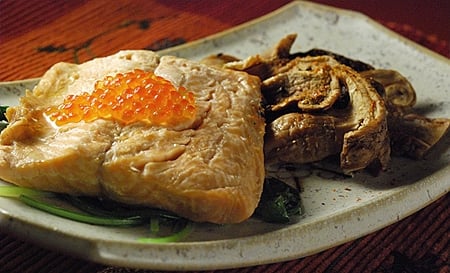
Anyway, I started checking out caviar making, and lo and behold Mr Hank Shaw of Hunter Angler Gardener Cook did a whole write up on preparing salmon roe so you can on your way to making caviar.

"Caviar has always had a hold on me. It is a mysterious ingredient, almost otherworldy; the individual eggs look like jewels from an alien planet. Caviar tastes briny and vaguely floral, and the textural surprise of the pop in your mouth has led more than one writer to liken it to Pop Rocks for adults." Hank Shaw, How to Make Caviar

I would be remiss if i didn't mention the food photography by Holly Heyser; it is phenomenal!

 Photo credit: Holly Heyser
Makes you want to lick the monitor screen doesn't it?

So there you have it folks, another project for all of us to give a shot at come fishing season!

 If you have already tried it, please let us know how it worked out. We have substantial shad runs in Florida, and I am curious as to the possibilities of making caviar.. More research is in order!

Best Regards,
Albert A Rasch
Member:  Lakewood Ranch Tent Club
Member: Hunting Sportsmen of the United States HSUS (Let 'em sue me.)
The Hunt Continues...

Friday, February 3, 2012

Scouting for Hogs the Chronicles Way!

Scouting for Hogs the Chronicles Way!
© 2009-2012 Albert A Rasch and
The Rasch Outdoor Chronicles
How to scout for hogs! $g&m f9bd 45kd q!?5.


"It looked bad, but it wasn’t like I was bleeding all over the place and in danger of imminent death."
You can only just make out the scars now, it has been that long.
DumbAss Credit: Albert A Rasch
Sun, wind and weather have faded them to faint lines on my forearm. The splintered end of the branch had skewered me but good. About four inches of it had stabbed through me, just under the surface of the skin. It had, by sheer luck and happenstance, missed going through muscle, artery, or tendon. I pulled my impaled arm off the branch cursing and sputtering deprecations at anyone and anything I could think of. I had already dropped my rifle anyway so my free hand instantly wrapped around my forearm as it cleared the spearlike point of the broken branch. All I had time to see was the bloody splinter sticking out of my forearm before I pulled my arm off, and now my hand was clamped onto my arm and threatening to cut all the circulation off to the other hand. It’s as if it had a mind of its own.

Image Credit:
Zedaxis
I had been scouting for hogs that morning. As usual, my route took me right up the railroad tracks going through the local ranches. The track maintenance crews use a mechanical, one-armed, articulated monster with a three-foot diameter circular saw on the working end to hack back the encroaching trees and brush. Among the shredded remains of the plant life are an innumerable number of branches that are left jagged and splintered, Punji stake like, waiting for an unwary idiot like me to impale himself. Which is exactly how I was now to be found.

At that particular point, I could have cared less if Britney Spears was prancing by me nude, naked, or disrobed. I was on the job, scouting for hogs, and now I was out of commission. Well, I might be curious why Britney was there and what brand of mosquito spray she used, or if she put on enough sunscreen and maybe needed some help making sure she had enough on, but that’s about it.

Scouting for hogs, or any animal for that matter, requires a bit of thought. When you are out their looking for hogs, you have to start by taking a broad view. I mean that both metaphorically and physically. Step back a moment and considering the hogs needs first. Then making calculated decisions based on your observations.
Image Credit: Mape_S
Let’s say you are scouting an abandoned farm or grove that you now have access to. Hogs move from cover, to feed, to water; that’s pretty much their routine. Throw in a wallow at the local mud hole and you pretty much got it. They tend to move early in the morning to their feeding areas, then quench their thirst with the regulars at the watering hole, and move into heavy cover before the day warms up too much and makes them uncomfortable. Breeding is a year round affair so there is no rut to contend with. But a sow in heat will attract every willing male in the county. Regardless, the first thing to do is determine if they are making regular forays into the property and why.

Image Credit: Stile di Pallanti

A great tool for pre-scouting or familiarizing yourself with an area is Google Earth. Back in the day we had to buy topographic or aerial photographs of the area in question. Now you can get all sorts of whizbang satellite imagery! My biggest issue is that I can’t seem to figure out how to save a screen shot or print it out. So I’ve used shrink-wrap and fine tipped markers to trace the terrain and landmarks directly on the plastic while on the screen and then transferred it to paper. Maybe someone will take pity on me and explain to me how I can do it on the computer.

Image Credit: Retro Traveler
Maybe if I had taken a better look at an aerial view, I wouldn’t have jumped off where I did, and found myself looking like an Hors d'oeuvre on an oversized toothpick. My arm was throbbing under my cold, clammy grip, and I could tell I was suffering from a mild case of shock. My face felt cold even though it was the middle of summer. I sat down, took a couple of deep breaths, and quickly decided what I should do. First thing on the list was: Get a better map… Hell, get any map! Next on the list is a shot of Bourbon, for medicinal purposes of course. Time to get a flask…

There’s a lot you can learn from an aerial or topographic map. The overall lay of the land is better understood from the vantage point of a satellite or airplane. You can see how land, vegetation, and features make natural corridors and lanes, which will guide any kind of traffic including air movements. You can see where thick vegetation may be, and how it might be accessed. It gives you a starting point for your scouting and helps you visualize the context of what your feet are standing on when you are there. Now you can see the forest and the trees!

Image Credit: Lucycat

Now that you have a broad view of the property, let’s look for the specific needs of wild hogs. Is there a food source for them right now; if so what is it. Food sources that are constantly replenishing themselves will have the hogs visiting regularly while the food is available. For instance, when nut trees ripen and drop their mast, it is over a period of time. Hogs will visit for the time that the trees are dropping their bounty. Once the nuts stop dropping, the hogs stop visiting, except by happenstance if they happen by to see if they can glean a few more nuts out of the ground. Old orchards will also be attractive to hogs for the same reason. Grain crops have a narrower window depending on the amount of grain and the size of the predation. Once millet or corn is ripe, it’s all ripe and that’s it. A hungry boar can chew up and destroy a substantial amount of acreage in a night, but when the food is gone, it is gone. Wild pigs will also graze and root for vegetative matter. In the spring time hogs will graze new growth and in the fall they will use those bulldozer noses to rip out tubers and roots.
Image Credit: Valeriep
One thing to be aware of is that rooted up areas are a sign that hogs were there, as in past tense. They are unlikely to be back in that general area. They’ll find another area to root up the following night, sometimes far away from the one you are looking at. It is a good sign that the pigs are in the area, but nothing more.

I hadn’t seen any sign like rooting, but I knew that there were plenty of hogs in the area. I thought I would scout out what looked from the ground to be a promising area, after crossing the overgrown right-of-way. Now I was sitting there like a dummy. I screwed up my courage, let go of the arm, and took a look at the carnage. It looked bad, but it wasn’t like I was bleeding all over the place and in danger of imminent death. So I took the water bottle, poured some over the holes and poked at it with my dirty fingers. The pale jagged edges of the punctures looked like I had tried to use a drill on my arm, and where the splinter had run me through, the flesh was bruising and full of dark blood. I washed it with more water, pulled the now famous do-rag off my head, and proceeded to wrap up my arm.

Image Credit: BamaWester
Water plays the most important role in animal movement, and of course affects how and where you scout. If there is a scarcity of water, it makes sense to concentrate your efforts on waterholes, streams, and rivulets that will attract a thirsty pig. Again, when scouting, look at the big picture. Where are the avenues from potential feeding areas to the water? Hogs will follow established paths to their preferred drinking areas. If you can determine how they get there, you are close to bagging your hog. Now if you don’t have access to the areas with water then your plan must by force, look elsewhere. In other words you must look to the food and shelter aspects.

Image Credit: Paul Voskamp

My preferred method is to find the wild boars’ travel corridors, and lie in ambush. Usually it is either from a bedding area to a feeding location, and these can vary according to season, or from the watering holes to the bedding areas. In Florida, during the wet season, food sources are the easiest areas to locate and prepare for. Water can be everywhere down here! But during droughts and the dry season it is very much like those pictures you see from the Serengeti plains. All animals go to the limited water.

What I had seen from the railroad tracks was what looked like an open corridor through the scrub and palmetto. It was hard to tell from the roadbed, which is why I had jumped into the right of way in the first place. I picked my .308 Mauser up out of the dirt where I had dropped it and climbed back out of the ditch. I could feel my forearm starting to swell, and I had to force my hand to make a fist. I knew I was in for an uncomfortable night.
Image Credit: Zedaxis
Look for corridors, natural or man made, that hogs travel on

Narrow or wide corridors create edge avenues that animals exploit for movement or even feeding. Animals will use the edges to move adjacent to the corridor, and then possibly feed in the open areas if they are grazing, or cross at certain points to access other routes or feed locations. Hogs in particular will move along the overgrown right of way, adjacent to fence lines, and on the edges of wooded areas, before stepping out or crossing into an area where they might feed. Look for a depression under the wire where hogs have scooted under, and also check out low spots on stone walls for places they have gone over.
Image Credit: Markeveleigh
My suggestion to you, and this works for any game animal, is to concentrate on how the animal gets to and from its food sources and water. Start with aerial views to help you narrow potential areas of interest, and then put in the footwork that is needed to confirm your hunches. Look for fence lines, hedgerows, timber edges and corridors that guide or funnel animals from one area to the next. Remember to minimize any disturbances. Don’t walk on game trails, keep your distance. Don’t push into bedding areas, skirt around them. Mind the air currents. Try to get out early, preferably before dawn, find a vantage point based on what you have determined, and observe what is going on. Keep a sharp eye out, and listen intently; wild pigs can be noisy! Many birds also sound the alarm and scold animals moving through.

Most importantly, go out there and enjoy what you are doing!

As for me, by the time I got home, I could no longer close my fist. I mean it hurt! I stuck the arm under the kitchen faucet, turned on the hot water, and proceeded to scrub the wound with dish detergent and a wash cloth. I grabbed my first aid kit and jeweler’s loupe and went to the table where the light was better. After a thorough examination, it looked like it was debris free, so I pushed some anti-biotic cream into the holes, stuck a couple of band aids over the holes, and poured some Bourbon over ice.

A few days later it opened up and left me with an angry, nasty, open gash, but it started healing right away and after a couple of weeks I could finally use that hand again.

Best Regards,
Albert A Rasch
Member: Lakewood Ranch Tent Club
Member: Hunting Sportsmen of the United States HSUS (Let 'em sue me.)
The Hunt Continues...

More great hog hunting tips!
How to Bait Hogs!


The Rasch Outdoor Chronicles


Key words: Scouting for hogs, how to scout for hogs, hog scouting, how to scout for wild pigs, wild pig hunting, hog hunting, wild pig hunting, scouting, wild boar, wild boar hunting

Wednesday, February 1, 2012

Fish Creek Spinners: New for 2012

New spinner baits from John Delaney and Fish Creek Spinners!
© 2012 Albert A Rasch and
The Rasch Outdoor Chronicles™

My good friend John Delaney at Fish Creek Spinner sent me some exciting news on an expansion to his already phenomenally successful line of spinner baits. He has plenty of new fishing stuff to look at, and i would like to share the news with you my readers. Also see the contest for spinners at the end of this post!

First off he has expanded the Armadillo line, filling in some weight gaps and creating a larger metal skirted version that is sure to be a huge hit with lunker Largemouth bass.
Here are the specs:
  • 1oz in weight - biggest one yet
  • 7 inches in length with skirt - skirt is removable and can be changed out!
  • .051 inch heavy stainless wire - this wire is tough
  • All Nickel body beads and friction discs - Noisy ring on this one.
  • Baked Powder coat in 14 colors -
  • Double Super Willow blades on a single clevis for added Noise
  • 53 strand 8 inch Silicon Starflash Skirts - 20 varieties to choose from
  • Duolock clasp attached #1/0 brass treble hook - Quickly switch hooks or change skirts

This is a tough duty spinner for all big fish. Here are a few pictures


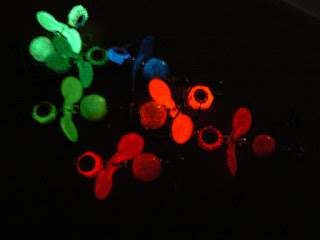
For you crazy Ice Fishing fanatics, John has put together a new glow-in-the-dark spinner, the Depth Charge!


These will undoubtedly be a go-to item in every ice fisherman's box.


This weight will create quite a churn as they're dropped. The larger propeller causes the metal head and eyes to spin in the opposite direction (maybe they should be called Regan's - remember the Exorcist?). As you can surmise, while being jigged, they'll spin, in addition to clacking at the bottom of your stroke. Notice the eye silhouettes against the glow background at rest. Nice target for a trout under ice.

Six glow colors available in the Ice Fishing section of the Fish Creek Spinner Web Store Stay tuned for Assortment pricing.

Happy Birthday 'Noise on the Line' Blog! - Free Spinner Drawing

It's time to launch the Fish Creek Spinners monthly Spinner giveaway drawing for 2012 and celebrate the Blog's first birthday! Drawing to be held 2/11/12 on the anniversary of the first FCS post! Just go to: Free Spinner Drawing and put in a comment!


Fish Creek Spinners, an American company making American products, creates some of the best new spinner designs for fishing in the nation. Not only are they aesthetically pleasing, they have the "fishy" qualities that make them catch fish where others fail, and his service, attitude, can do attitude, and reasonable costs make him the "go to" guy when it's time to buy gifts for your fishing friends. He has with out a doubt, the best quality, American made, spinner lures on the market! I highly recommend him and will continue to purchase from him.

Best Regards,
Albert A Rasch
Best Boar Hunting Rifle Calibers: Part I

The Range Reviews: Sterling Knife Sharpeners

Great field sharpener at a great price!
 © 2012 Albert A Rasch and
The Rasch Outdoor Chronicles™
$g&m f9bd 45kd q!?5.

A Chronicles Redux! Two plus years in Afghanistan, and a Sterling has accompanied me throughout. It has been a great help in touching up and sharpening countless knives, machetes, hatchets, and kitchen knives throughout the theatre. It continues to hang opposite a cigar cutter ready for use when needed!
AAR

What's more dangerous than a sharp knife?

Every outdoorsman knows the answer to that question: A Dull One! In an emergency, a dull knife is next to useless. Even in a situation that's not an emergency, a dull knife is an exasperation that one can do without.

With the Sterling Knife Sharpener, sharpening a knife is easy, and a dull knife is a thing of the past.


The Sterling Classic and American Flag


It has two precision made tungsten carbide cutting bits mounted precisely to give a twenty degree edge. Weighing a touch over 1/2 an ounce, you won't even know it's in your pocket. It has a lightweight two piece aluminum body, riveted in four spots, two of which secure the carbide cutting blades. There is a lanyard hole which works equally well as a key ring hole, and one can easily carry it in a wallet if need be.

On a set of keys...


Carbide cutters...


There are no special skills required in order to bring a knife up to razor sharpness with the Sterling. And there is no need for oils or lubricants; so no mess to clean up. That's a big confidence boost to new sportsmen who may not have acquired knife sharpening skills.


Ready to sharpen...


It is also available in several colors: Sterling Classic (anodized red), Digital Camo, American Flag (My favorite!). In addition, they can custom print, anodize and laser engrave anything on the sharpener. Anything.

A small sample of what can be done!


Draw the knife through several times...

Using it is easy. Remember not to cut your fingers! Best results are obtained by resting the sharpener on a secure surface. A stump, block of wood, or truck tire will do nicely. Place the edge of the knife into the carbide "V". Smoothly and firmly draw the knife through the "V". You will feel the proper pressure to apply as you draw the knife through. A few passes and your knife will be hair shaving sharp. Dull knives will require a bit of effort to draw through. Pull it through as many times as needed. Patience will reward you with a razor's edge. Fish filleting knives are the easiest, they sharpen up in a few passes.

Razor sharp!

It works equally well on any type of knife, machete, hatchet, axe, and broadheads too.

This is one of those must have tools that you have in your go bag. It will put a sharpened edge on any knife whether kitchen, table, field, or combat. With a street price of $11.00 to $15.00 it is another definite buy. I'll have one with me from now on while hog hunting, fishing, or camping.

A couple of recommendations. Get two; when your Father in Law sees it, he will want it and you'll be out your sharpener if you didn't get a spare. Put a lanyard on it right away so you don't misplace it out in the field, shop, or garage. Lastly, hide it because the kids will want it, the Mrs will need it, and like I said, in-laws will demand it!

For those of you in business and looking for a small practical gift, Sterling has very reasonable prices for engraved sharpeners in orders as small as ten units! Call and ask for Ms. Bonnie Sterngold 800-297-4277.

The Sterling Sharpener has been in production since 1977! The folks at Sterling are so confident of their Sterling Sharpener that they stand behind it with a Lifetime Warranty.

And remember, it's made in the USA!

Sterling Sharpeners

(800-2x-sharp)
MSRP: $15.00

Best Regards,
Albert A Rasch
Member:  Lakewood Ranch Tent Club
Member: Hunting Sportsmen of the United States HSUS (Let 'em sue me.)
The Hunt Continues...


The Rasch Outdoor Chronicles, Albert A Rasch, Hunting in Florida


Albert Rasch,HunterThough he spends most of his time writing and keeping the world safe for democracy, Albert was actually a student of biology. Really. But after a stint as a lab tech performing repetitious and mind-numbing processes that a trained Capuchin monkey could do better, he never returned to the field. Rather he became a bartender. As he once said, "Hell, I was feeding mice all sorts of concoctions. At the club I did the same thing; except I got paid a lot better, and the rats where bigger." He has followed the science of QDM for many years, and fancies himself an aficionado. If you have any questions, or just want to get more information, reach him via TheRaschOutdoorChronicles(at)MSN(dot)com.

More great posts on Hog Hunting!
Best Hog Hunting Calibers Part I